

17 : 30 | Santiniketan


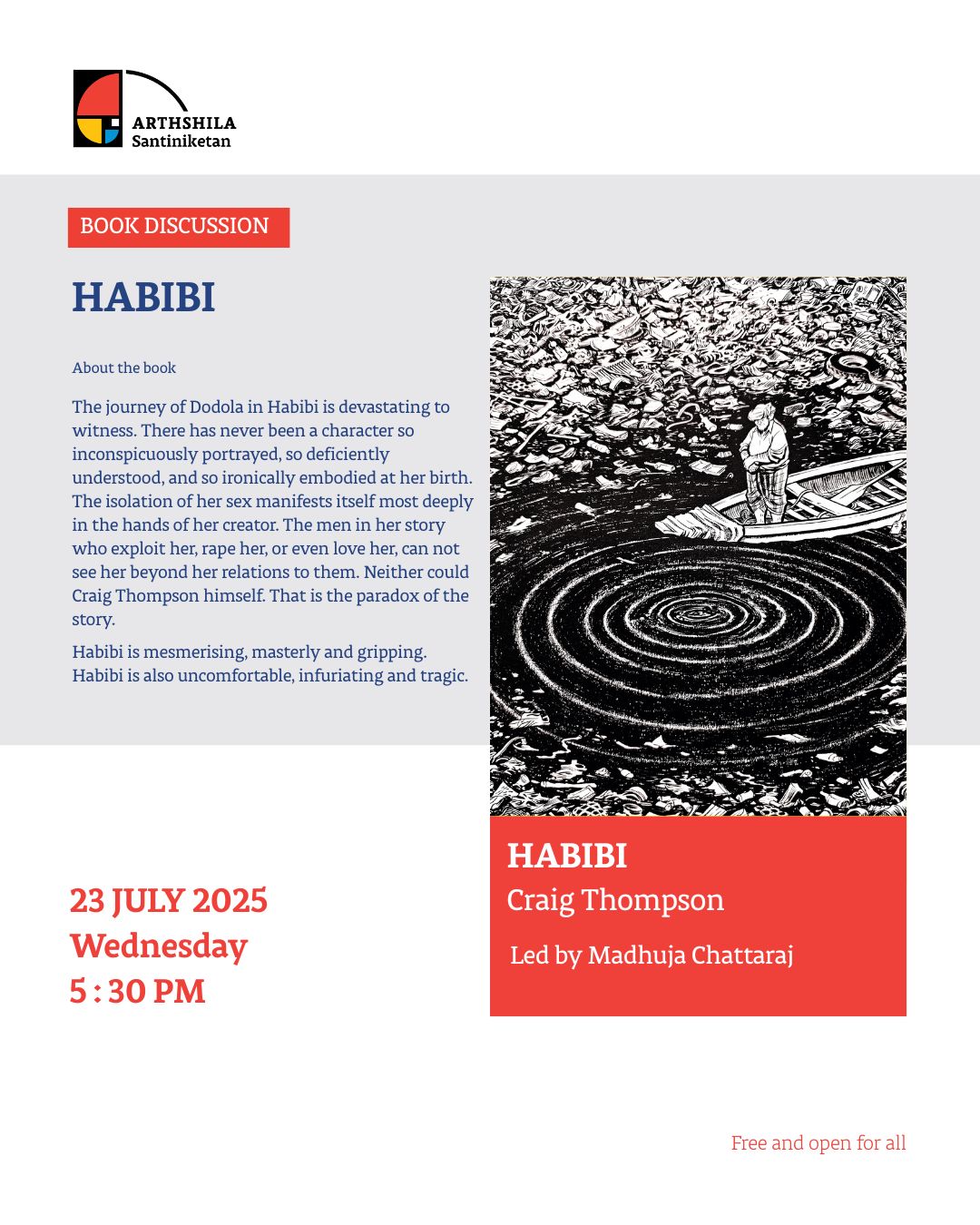
𝗝𝗼𝗶𝗻 𝘂𝘀 𝘁𝗵𝗶𝘀 𝗪𝗲𝗱𝗻𝗲𝘀𝗱𝗮𝘆 𝗮𝘁 𝗔𝗿𝘁𝗵𝘀𝗵𝗶𝗹𝗮 𝗦𝗮𝗻𝘁𝗶𝗻𝗶𝗸𝗲𝘁𝗮𝗻 𝗳𝗼𝗿 𝘁𝗵𝗲 𝗯𝗼𝗼𝗸 𝗱𝗶𝘀𝗰𝘂𝘀𝘀𝗶𝗼𝗻 𝘀𝗲𝘀𝘀𝗶𝗼𝗻 𝘁𝗶𝘁𝗹𝗲𝗱 ‘𝗛𝗔𝗕𝗜𝗕𝗜’ 𝗯𝘆 𝗖𝗿𝗮𝗶𝗴 𝗧𝗵𝗼𝗺𝗽𝘀𝗼𝗻, 𝘄𝗵𝗶𝗰𝗵 𝗶𝘀 𝗹𝗲𝗱 𝗯𝘆 𝗠𝗮𝗱𝗵𝘂𝗷𝗮 𝗖𝗵𝗮𝘁𝘁𝗮𝗿𝗮𝗷.
𝟮𝟯 𝗝𝘂𝗹𝘆, 𝟮𝟬𝟮𝟱 | 𝗪𝗲𝗱𝗻𝗲𝘀𝗱𝗮𝘆
𝟱:𝟯𝟬 𝗽𝗺 𝗼𝗻𝘄𝗮𝗿𝗱𝘀
𝗢𝗽𝗲𝗻 𝘁𝗼 𝗔𝗹𝗹.
𝗔𝗯𝗼𝘂𝘁 𝘁𝗵𝗲 𝗯𝗼𝗼𝗸
The journey of Dodola in Habibi is devastating to witness. There has never been a character so inconspicuously portrayed, so deficiently understood, and so ironically embodied at her birth. The isolation of her sex manifests itself most deeply in the hands of her creator. The men in her story who exploit her, rape her, or even love her, can not see her beyond her relations to them. Neither could Craig Thompson himself. That is the paradox of the story.
All the expository, proverbial anecdotes from the Quran and the Bible that stream from her mind and grace the book only sustain her through it, but fail to emancipate her. One feels that her vision and, as such, the book, has been conceived from an undeniable orientalist inquisition of the author, alienating her from the realism that she could have represented. Yet Habibi is essential for all its exonerating qualities. The exquisite art inspired by Persian miniatures, calligraphic charm of minute Naksh cursives opposed by sombre Kufic poise, the depth of its inquiry on the Islamic and Christian faith and how brilliantly they fuse together astonish us. Habibi is mesmerising, masterly and gripping. Habibi is also uncomfortable, infuriating and tragic.

