

17 : 30 | Santiniketan


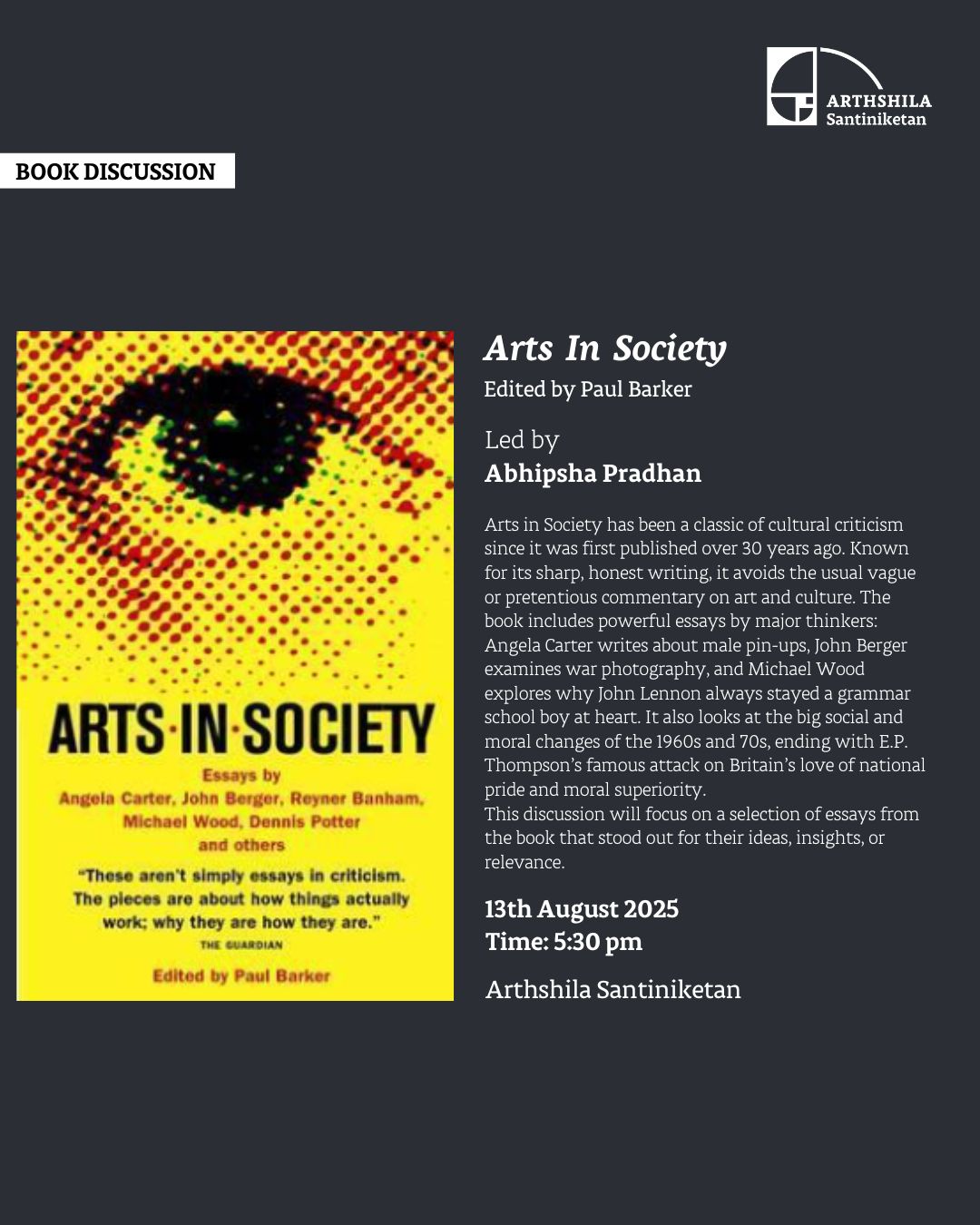
𝗝𝗼𝗶𝗻 𝘂𝘀 𝘁𝗵𝗶𝘀 𝗪𝗲𝗱𝗻𝗲𝘀𝗱𝗮𝘆 𝗮𝘁 𝗔𝗿𝘁𝗵𝘀𝗵𝗶𝗹𝗮 𝗦𝗮𝗻𝘁𝗶𝗻𝗶𝗸𝗲𝘁𝗮𝗻 𝗳𝗼𝗿 𝘁𝗵𝗲 𝗯𝗼𝗼𝗸 𝗱𝗶𝘀𝗰𝘂𝘀𝘀𝗶𝗼𝗻 𝘀𝗲𝘀𝘀𝗶𝗼𝗻 𝘁𝗶𝘁𝗹𝗲𝗱 ‘𝗔𝗿𝘁𝘀 𝗜𝗻
𝗦𝗼𝗰𝗶𝗲𝘁𝘆’ edited 𝗯𝘆 𝐏𝐚𝐮𝐥 𝐁𝐚𝐫𝐤𝐞𝐫, 𝘄𝗵𝗶𝗰𝗵 𝗶𝘀 𝗹𝗲𝗱 𝗯𝘆 𝐀𝐛𝐡𝐢𝐩𝐬𝐡𝐚 𝐏𝐫𝐚𝐝𝐡𝐚𝐧.
𝟭𝟯𝘁𝗵 𝗔𝘂𝗴𝘂𝘀𝘁, 𝟮𝟬𝟮𝟱 | 𝗪𝗲𝗱𝗻𝗲𝘀𝗱𝗮𝘆
𝟱:𝟯𝟬 𝗽𝗺 𝗼𝗻𝘄𝗮𝗿𝗱𝘀
𝗢𝗽𝗲𝗻 𝘁𝗼 𝗔𝗹𝗹.
Arts in Society is a widely respected collection of cultural criticism that has remained influential since its publication over three decades ago. Known for its clear and direct style, the book avoids vague or overly academic commentary, instead offering sharp insights into the role of art and culture in society. It features essays by major thinkers such as Angela Carter on male
pin-ups, John Berger on war photography, and Michael Wood on John Lennon’s lasting connection to his grammar school roots. The collection also explores the major social and moral shifts of the 1960s and 70s, ending with E.P. Thompson’s powerful critique of Britain’s attachment to national pride and moral authority.
This discussion will explore a selection of essays from the book that stood out for their depth, relevance, or originality. These particular pieces either resonated on a personal level or offered fresh and thought-provoking perspectives on the cultural and political issues they address.
𝗙𝗿𝗲𝗲 𝗮𝗻𝗱 𝗼𝗽𝗲𝗻 𝗳𝗼𝗿 𝗮𝗹𝗹.
𝗪𝗲 𝗹𝗼𝗼𝗸 𝗳𝗼𝗿𝘄𝗮𝗿𝗱 𝘁𝗼 𝘀𝗲𝗲𝗶𝗻𝗴 𝘆𝗼𝘂 𝘁𝗵𝗲𝗿𝗲!
#arthshilasantiniketan #arthshila #bookdiscussion #takshila #santiniketan #artsinsociety #nostagia #filmandphotography #essays #artandmusic

