

18 : 00 | Santiniketan


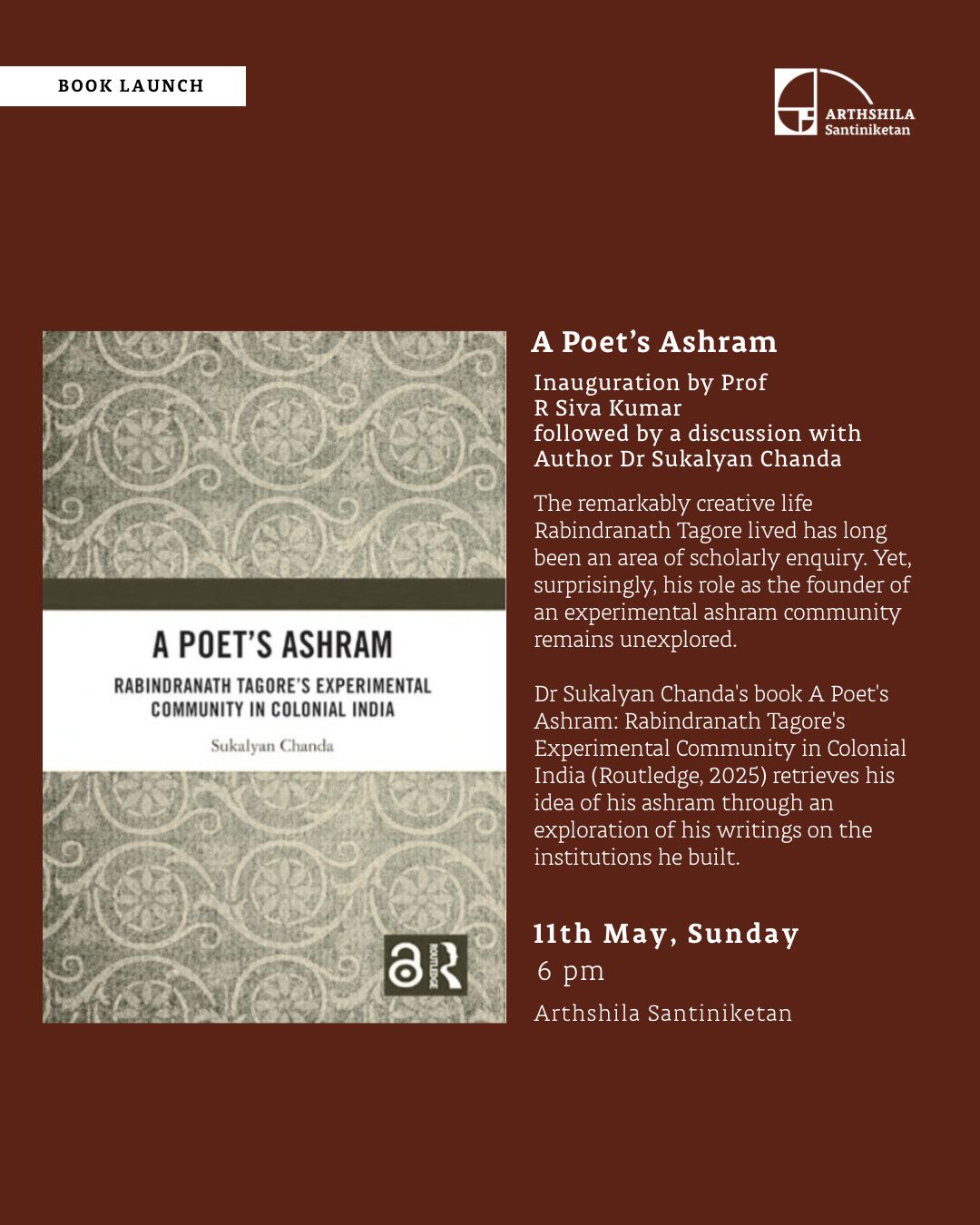
A Poet’s Ashram: Book Launch
Join us this Sunday for a 𝗯𝗼𝗼𝗸 𝗹𝗮𝘂𝗻𝗰𝗵 titled ‘𝗔 𝗣𝗼𝗲𝘁’𝘀 𝗔𝘀𝗵𝗿𝗮𝗺: 𝗥𝗮𝗯𝗶𝗻𝗱𝗿𝗮𝗻𝗮𝘁𝗵 𝗧𝗮𝗴𝗼𝗿𝗲’𝘀 𝗘𝘅𝗽𝗲𝗿𝗶𝗺𝗲𝗻𝘁𝗮𝗹 𝗖𝗼𝗺𝗺𝘂𝗻𝗶𝘁𝘆 𝗶𝗻 𝗖𝗼𝗹𝗼𝗻𝗶𝗮𝗹 𝗜𝗻𝗱𝗶𝗮’ by 𝗗𝗿. 𝗦𝘂𝗸𝗮𝗹𝘆𝗮𝗻 𝗖𝗵𝗮𝗻𝗱𝗮.
Eminent art historian 𝗣𝗿𝗼𝗳. 𝗥 𝗦𝗶𝘃𝗮 𝗞𝘂𝗺𝗮𝗿 will inaugurate this recently published monograph, and a discussion will be held.
𝗗𝗘𝗧𝗔𝗜𝗟𝗦:
𝟭𝟭𝘁𝗵 𝗠𝗮𝘆 𝟮𝟬𝟮𝟱 | 𝗦𝘂𝗻𝗱𝗮𝘆
𝟲 𝗽𝗺 𝗼𝗻𝘄𝗮𝗿𝗱𝘀
𝗢𝗽𝗲𝗻 𝘁𝗼 𝗔𝗹𝗹.
The remarkably creative life Rabindranath Tagore lived has long been an area of scholarly enquiry. Yet, surprisingly, his role as the founder of an experimental ashram community remains unexplored. Dr Sukalyan Chanda’s book retrieves his idea of his ashram through an exploration of his writings on the institutions he built.
The ashram community Tagore endeavoured to create in Santiniketan during the period 1901–1941 was his response to the question of modernity. Through his effort to reinvent the ancient Indian ideal of the ashram, he articulated his idea of a mode of collective living that was meant to be grounded in a set of ethical values derived from India’s civilizational inheritance. This book traces the history of how his ashram school evolved into a community that practised egalitarianism, inclusiveness and creativity through its daily existence. It explores a range of nineteenth- and twentieth-century discourses in order to situate that idea within its historical context, a critical juncture in the history of modern India and the world. This book’s reading of his project unravels its anti-colonial underpinnings and the commonalities it shared with some of the other similar experimental communities that challenged illiberal ideologies and power relations during the early twentieth century.
𝗩𝗲𝗻𝘂𝗲: Arthshila Santiniketan, Plot no. 424, Mouza Shyambati. P.S: Santiniketan, Bolpur, West Bengal

