

17 : 30 | Santiniketan


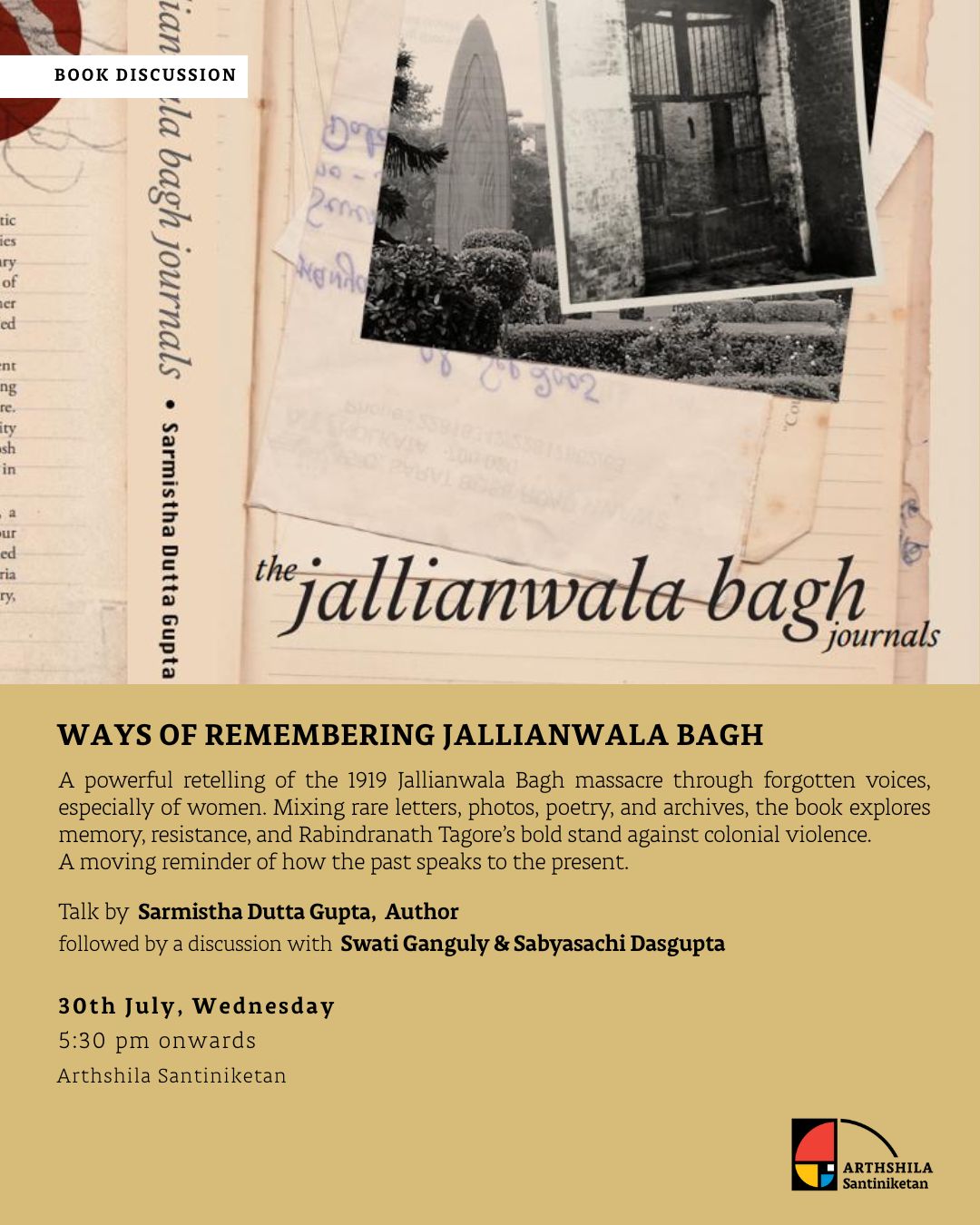
𝗝𝗼𝗶𝗻 𝘂𝘀 𝘁𝗵𝗶𝘀 𝗪𝗲𝗱𝗻𝗲𝘀𝗱𝗮𝘆 for the book discussion of “𝗧𝗵𝗲 𝗝𝗮𝗹𝗹𝗶𝗮𝗻𝘄𝗮𝗹𝗮 𝗕𝗮𝗴𝗵 𝗝𝗼𝘂𝗿𝗻𝗮𝗹𝘀” by 𝗦𝗮𝗿𝗺𝗶𝘀𝘁𝗵𝗮 𝗗𝘂𝘁𝘁𝗮 𝗚𝘂𝗽𝘁𝗮 at Arthshila Santiniketan.
𝟯𝟬𝘁𝗵 𝗝𝘂𝗹𝘆 𝟮𝟬𝟮𝟱 |𝗪𝗲𝗱𝗻𝗲𝘀𝗱𝗮𝘆 | 𝟱.𝟯𝟬 𝗽𝗺
𝗪𝗮𝘆𝘀 𝗼𝗳 𝗥𝗲𝗺𝗲𝗺𝗯𝗲𝗿𝗶𝗻𝗴 𝗝𝗮𝗹𝗹𝗶𝗮𝗻𝘄𝗮𝗹𝗮 𝗕𝗮𝗴𝗵
A discussion around Sarmistha Dutta Gupta’s book The Jallianwala Bagh Journals (Jadavpur University Press, 2024) that vivifies dormant histories and local narratives of the Jallianwala Bagh Massacre of April 1919, unmutes voices of women, and problematizes the politics and ethics of remembering and memorialization. Critically remembering Rabindranath Tagore’s long and deep engagement with the Jallianwala Bagh episode—hitherto largely forgotten—is also central to the book.
The Jallianwala Bagh Journals subverts the agenda of erasure of history and contextualises many of India’s present crises in the light of its complicated past. Written innovatively in the form of a journal, it creates a quilted narrative through wide-ranging and rare material like photographs, hand-written letters, poetry, interviews, conversations, press reports and archival documents.
Book Talk by 𝗦𝗮𝗿𝗺𝗶𝘀𝘁𝗵𝗮 𝗗𝘂𝘁𝘁𝗮 𝗚𝘂𝗽𝘁𝗮, an independent writer and researcher.
𝗗𝗶𝘀𝗰𝘂𝘀𝘀𝗶𝗼𝗻 𝗣𝗮𝗻𝗲𝗹 – 𝗦𝘄𝗮𝘁𝗶 𝗚𝗮𝗻𝗴𝘂𝗹𝘆, Department of English, Visva Bharati and 𝗦𝗮𝗯𝘆𝗮𝘀𝗮𝗰𝗵𝗶 𝗗𝗮𝘀𝗴𝘂𝗽𝘁𝗮, Department of History, Visva Bharati.
𝗙𝗿𝗲𝗲 𝗮𝗻𝗱 𝗼𝗽𝗲𝗻 𝗳𝗼𝗿 𝗮𝗹𝗹.
𝗪𝗲 𝗹𝗼𝗼𝗸 𝗳𝗼𝗿𝘄𝗮𝗿𝗱 𝘁𝗼 𝘀𝗲𝗲𝗶𝗻𝗴 𝘆𝗼𝘂 𝘁𝗵𝗲𝗿𝗲!

